
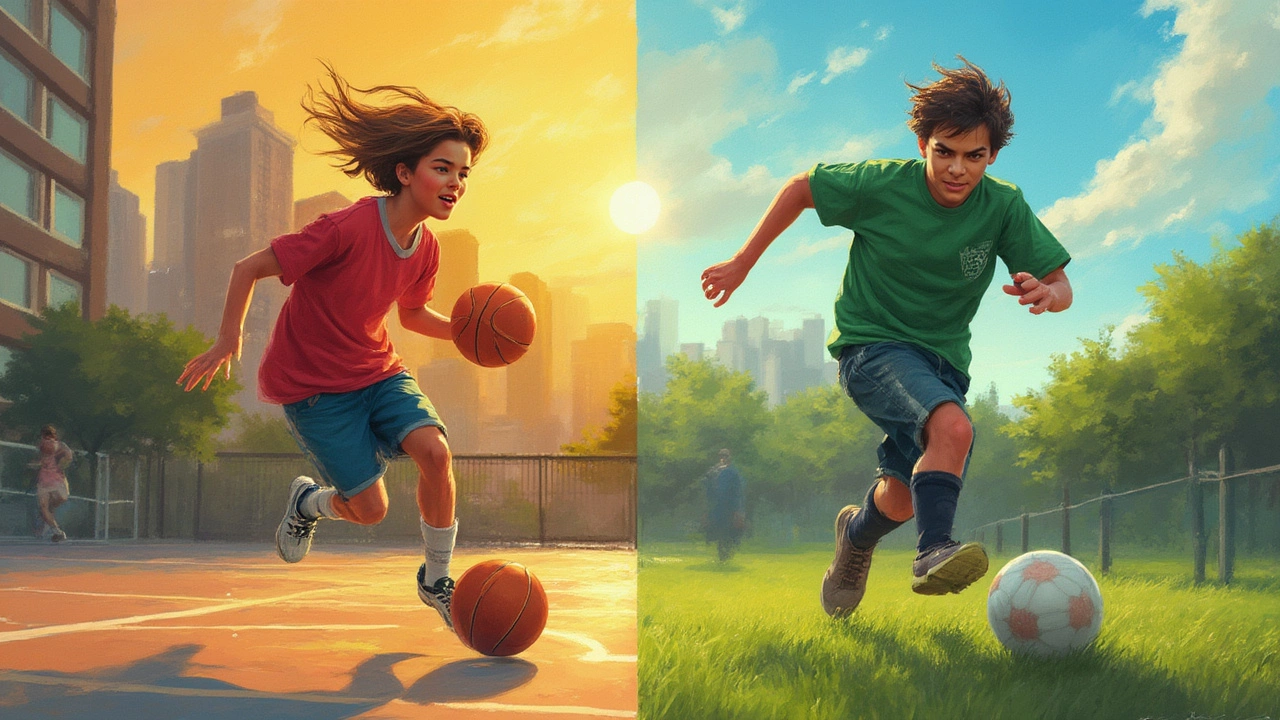
Jumping into the Basketball vs. Soccer debate? Most people pick a side early, but few stop to break down what really sets them apart. If you’re thinking of playing or just want talking points for the next hangout, here’s where it gets interesting.
Look at the basics first: basketball packs speed, quick bursts, and nonstop action in a small court. Soccer offers more room, longer runs, and a big focus on tactics and shape. The gear is simple—basketball needs just a ball and a hoop; soccer needs a ball and some open space, and often no goalpost at all if you improvise. You don’t need fancy gear to get started in either game, which makes both easy for pick-up games with friends or in the neighborhood park.
- Where the Games Clash: Rules and Culture
- Getting Started: Gear and Skills
- Fitness and Endurance
- Team Dynamics and Strategy
- Cool Facts and Play Smarter Tips
Where the Games Clash: Rules and Culture
This is where Basketball vs. Soccer really gets interesting. The way you play, what’s expected, and even the vibe on the court or field can feel like night and day.
Let’s talk numbers. A basketball team lines up with 5 players on the court, while soccer goes big with 11 on each side. That difference changes almost everything—the court size, how much you run, and how plays develop. In basketball, subs roll in and out pretty much whenever, which keeps players fresh and the game fast. Soccer keeps it stricter, usually allowing only three to five subs the whole match in most leagues. Once you're subbed out for the day, that’s it until the next game. This means soccer players often pace themselves so they can last the full 90 minutes.
Check out this comparison for a quick hit of the biggest rule differences:
| Aspect | Basketball | Soccer |
|---|---|---|
| Team Size | 5 players | 11 players |
| Game Length | 48 minutes (pro NBA), 4 quarters | 90 minutes, 2 halves |
| Substitutions | Unlimited | 3-5 per match |
| Main Scoring Method | Shooting ball in hoop | Getting ball in net |
| Playing Surface | Indoor court | Grass/Artificial field |
| Contact | Some allowed, fouls for heavy contact | Limited, yellow/red card for fouls |
The culture around each sport shapes how fans react too. Basketball is loud, right next to the action, and fans sit feet from the court. Soccer crowds can take over entire neighborhoods, singing and chanting for their teams, and sometimes the whole city stops for a derby match.
Fouls work differently. In basketball, you’ll see constant whistles—moving screens, double dribbles, and shooting fouls. Soccer refs let more go, but if you pick up a yellow card, you have to watch yourself the rest of the game. Rack up two and you’re done. Go straight red, and your team has to play with fewer people.
Both sports have their own slang and rituals too. Basketball players talk about “triple-doubles” and “alley-oops,” while soccer players celebrate hat tricks and chant team songs. Don’t be surprised if you see players trading jerseys after a soccer game—a tradition you’ll never spot at the end of an NBA game.
If you’re choosing what to watch or where to play, these little rule and culture quirks can make a big difference in what you enjoy most.
Getting Started: Gear and Skills
Figuring out what you need to play basketball vs. soccer doesn’t have to be a headache. In basketball, you can get going with a ball, a hoop, and flat shoes—shoes matter for traction, but you won’t need the expensive models right away. That’s why so many city parks have at least one basketball hoop. Most public gyms and even some driveways are ready for a quick shootaround.
Soccer is even more flexible. All you need is a ball and any patch of ground. Don’t have goals? Use backpacks or water bottles to mark them. That’s how millions play in streets, parks, and even on sandy beaches. If you want to play in a league, cleats and shin guards become important—they’ll keep your shins bruise-free and help on slippery fields.
When it comes to basic skills, start simple in both sports. In basketball, dribbling, passing, and shooting are your core. As LeBron James once said:
"You need to master the basics—dribble, shoot, pass—before you chase any highlight play."
Soccer focuses on ball control, passing, and spacing. Kids start by learning how to trap a ball, dribble through cones, and send a pass straight to a teammate’s feet. Neither sport needs fancy tricks at the start; instead, spend time on fundamentals. Remember, even the pros keep drilling the basics before games.
- For basketball: Get a good grip on the ball, practice layups from both sides, and learn how to keep your eyes up while dribbling.
- For soccer: Work on keeping the ball close to your feet when dribbling, passing with the inside of your foot, and kicking with different parts of your shoe.
Both sports let you improve quickly with just a ball and some free time outside. If you’re just starting out, focus on having fun so you’ll stick with it as you build new skills in Basketball vs. Soccer.
Fitness and Endurance
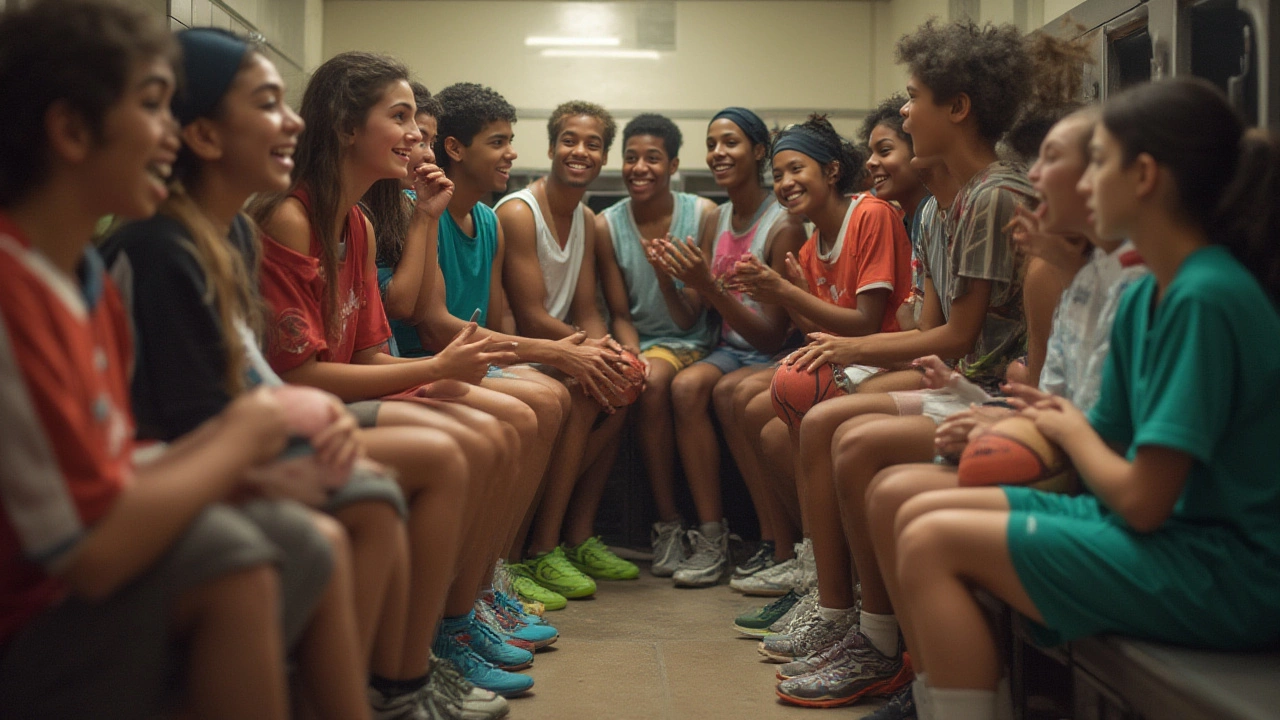
If you ever wonder which sport will get you sweating more, Basketball vs. Soccer isn’t a boring tie—each pushes your body differently. Let’s break down what goes on inside a game.
Soccer matches run 90 minutes with few breaks, and pros can cover up to 10-12 kilometers (about 6-7.5 miles) per game. It’s all about keeping up a solid pace over a long time. Soccer forces you to keep going, sometimes walking, often jogging, then suddenly sprinting after the ball.
Basketball games are much shorter (48 minutes in the NBA), but they’re packed with quick sprints, jumps, and changes of direction. Most players cover about 2-3 miles per game, but it’s intense work—sprinting, stopping, jumping, and shoving for rebounds every minute they’re on the court. Recovery breaks are short, so your heart rate spikes over and over.
| Sport | Average Distance per Game | Typical Game Length | Energy Style |
|---|---|---|---|
| Soccer | 10-12 km (6-7.5 mi) | 90 minutes | Endurance/jog-sprint mix |
| Basketball vs. Soccer | 2-3 mi | 48 minutes | High-intensity bursts |
Which one burns more calories? Soccer usually wins if games go the full ninety, but basketball has players burning even more per minute played, especially for guards who never seem to slow down.
If you’re looking at what this means for getting fit, here’s a tip:
- Soccer will boost your stamina and leg strength over time.
- Basketball builds explosive power and quick reflexes.
- Both will help your cardio, but soccer’s longer duration ups your staying power, while basketball preps you for those short bursts that leave you gasping.
Want to get better? Try mixing sprint drills from basketball into soccer training, or add steady running from soccer into your basketball routine to cover all your bases.
Team Dynamics and Strategy
When it comes to Basketball vs. Soccer, the way teams work together totally changes the feel of the game. In basketball, you've got five players per team on the court. Everyone touches the ball often, and you see tons of fast plays—think quick cuts, screens, and pick-and-rolls. Communication is non-stop since the court is tight and the action moves from defense to attack in seconds.
Soccer, on the other hand, gives each team 11 players spread out over a giant field. You get more specialized roles, like defenders holding the line, midfielders controlling the pace, and strikers looking for their moment. Passing is everything. It's common for a player to go several minutes without a touch, so positioning and patience matter way more.
Strategies in both games can get wild. Basketball teams often run set plays, like triangle offense or isolation for a star player, but they also need to react on the fly, especially during turnovers or fast breaks. Coaches can call timeouts to change things up or settle everyone down. In soccer, timeouts don’t exist, so shouting instructions from the sidelines is the norm, and halftime is the only real break for tactics. Teams might press high, park the bus on defense, or focus on counterattacks based on the opponent.
- If you’re new to either game, watch how teammates signal for passes or direct each other. You'll pick up creative teamwork tips fast.
- In basketball, try switching defensive assignments or practicing pick-and-rolls. It’s the easiest way to get used to reading teammates and opponents.
- With soccer, focus on spacing and communication. Practice keeping your formation and trusting teammates to cover when you move up or back.
The biggest thing? Both sports reward teamwork. You might see one player grab the headlines, but behind every highlight is a bunch of connected plays and smooth coordination. No one wins solo here.

Cool Facts and Play Smarter Tips
Here’s something wild—did you know that soccer is officially the world’s most popular sport, with about 4 billion fans, while basketball clocks in with a solid 2 to 2.4 billion? That’s not just bragging rights; it affects everything from global tournaments to endorsement deals.
Let’s talk game duration. Soccer matches usually last 90 minutes with barely any timeouts, so players spend more time moving. On the other hand, basketball packs action in 48 minutes, with frequent stops, substitutions, and timeouts to keep things fast-paced. Here’s how the average player stacks up in a pro game:
| Stat | Basketball | Soccer |
|---|---|---|
| Distance Run (Per Game) | 2.5-4 km | 9-13 km |
| Calories Burned (Per Hour) | 600-800 | 500-700 |
| Ball Contact (Per Player) | Constant | Occasional (except midfielders) |
Want to get smarter at either sport? Try these tips:
- Basketball: Practice dribbling with both hands and learn to spot open teammates quickly—passing, not shooting, wins games nine times out of ten.
- Soccer: Focus on positioning. You don’t need superstar footwork if you know where to stand when the ball’s coming your way.
- Both: Watch the pros, but don’t just look at the ball. Follow players off the ball to see how they open up space or defend.
- Stay fit for both. More stamina is always your friend, especially if you want to play at a harder pace and for longer periods.
One last fact for the Basketball vs. Soccer argument: Both sports have produced billion-dollar stars, but the highest-paid soccer players often eclipse those in the NBA thanks to massive club contracts and global endorsement deals. It pays to kick and shoot!